
As we all know, in the last couple of years the number of hybrid workers has
increased dramatically. I found some interesting data that supports the view that the hybrid work model is here to stay; 77% of remote workers show increased productivity (source), roughly 40% of Canadian jobs can be done from home (source), and companies that allow remote work have 25% lower turnover rates than those who don’t (source).
The next challenge for businesses is to ensure that hybrid workers are integrated into their business workflows so that the speed of processing can increase, whether an employee is in the office or working remotely. It’s never been more important for businesses to stay competitive and significant productivity gains can be accomplished by implementing automated digital workflow to transform your current manual business processes. If you can successfully deploy automated workflow the hybrid worker can be as productive in the office as they can while working from anywhere, and the remote and office team members that work together become seamlessly connected.
Top 5 business functions where workflow automation can easily improve efficiency:
- Accounts Payable
- Contracts Management
- Procurement
- Human Resources
- Sales and Customer Service
Top 4 benefits of workflow automation:
- Increase speed and accuracy – drastically reduce human error by automating error prone repetitive tasks like data input
- Data security with encryption – when the information and processes are digital, they can be secured and protected
- Increase the speed of approvals – your business can move faster with approval integrated into the work process providing automated notification to the approving manager
- Reduced paper – digital data capture of all related documents that are searchable
Businesses are now focused on learning about the best solutions to support moving to intelligent automated workflow so they can accelerate their business processes. If your business strategy is to become more productive with your current team by embracing a plan to achieve operational efficiency, reach out to talk to one of our experts.
 Without central control of your print fleet, security settings are extremely difficult to manage, and entry points for cybercrime are more easily overlooked. It becomes even more complex supporting work-from-home employees and integrating equipment to workflow automation systems. Your IT team could be focused on configuration settings and authentication rather than working on other valuable IT projects or support. Encryption and authentication can be accomplished universally with an integrated automated security management tool. We’ve had great success with HP JetAdvantage Security Manager, ask one of our experts to share best practices in this area.
 The downtown core in major cities across Canada is slowly coming back to life with many companies bringing employees back to the office 2 to 3 days per week. There are a lot of changes being made to office spaces to support the new hybrid workforce. There are updates happening in the physical office space, giving office workers more room while updating furniture in support of shared workspaces and creating more areas in the office for face-to-face collaboration. There’s also increased investment in technology, both hardware and software, to ensure that users can productively work from anywhere. At SmartPrint, we have a lot of projects on the go to help our clients simplify printing in the office by updating and consolidating hardware as well as updating the print infrastructure.



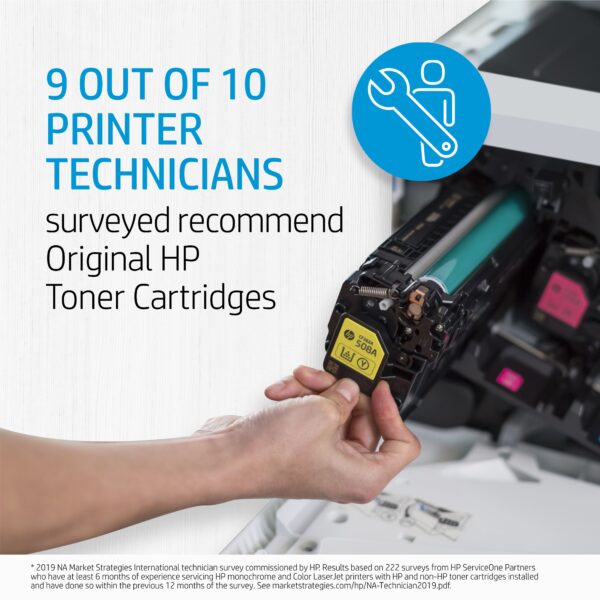 Sometimes what looks like savings can turn into a hassle. If you are running aftermarket supplies in your print devices, reach out to see how we can help to convert you to OEM. We typically find that we can help our clients make the change to OEM without impacting the total cost of ownership and the monthly operational cost to run the print environment. If you are currently running OEM supplies and are thinking about trying aftermarket supplies to try and save some money, there may be a better way to save!
  I’m always mindful of how what we do in our lives affects our planet, and although I could never have imagined that we would experience the tragedies of a global pandemic in our lifetime it’s good that there are some areas of impact that have been positive; like the effect it has had on sustainability with reduced emissions worldwide. We expect this to continue long term with so many leading companies embracing hybrid work models for their teams. I’m also intrigued that the pandemic has increased our propensity to be more sustainable. Organic food product sales have dramatically increased, people are mindful about purchasing ethically/sustainably produced products, and large companies are leading the way with changes to office space that supports hybrid work and sustainability. The transition to hybrid work is resulting in ongoing use of less fuel and energy for commuting while enabling a better work/life balance. The new focus that many have on the work/life balance has allowed our society to slow down a little. Many have found new hobbies, are spending more time outdoors and are experiencing new vacation adventures closer to home. The transition to hybrid work models is here to stay and this will have a lasting effect on reduced emissions that will positively support sustainability.
  If a device has reached the “end of life” it must go. Closing the security vulnerability gaps is critical, and when firmware updates and patches are no longer available from the manufacturer because it is end-of-life, there is a real risk. How do you make that happen while the
 All it takes is one opening for a hacker to exploit you and gain control of a compromised MFP. The hacker can quietly steal information, or they can penetrate deeper into your network.